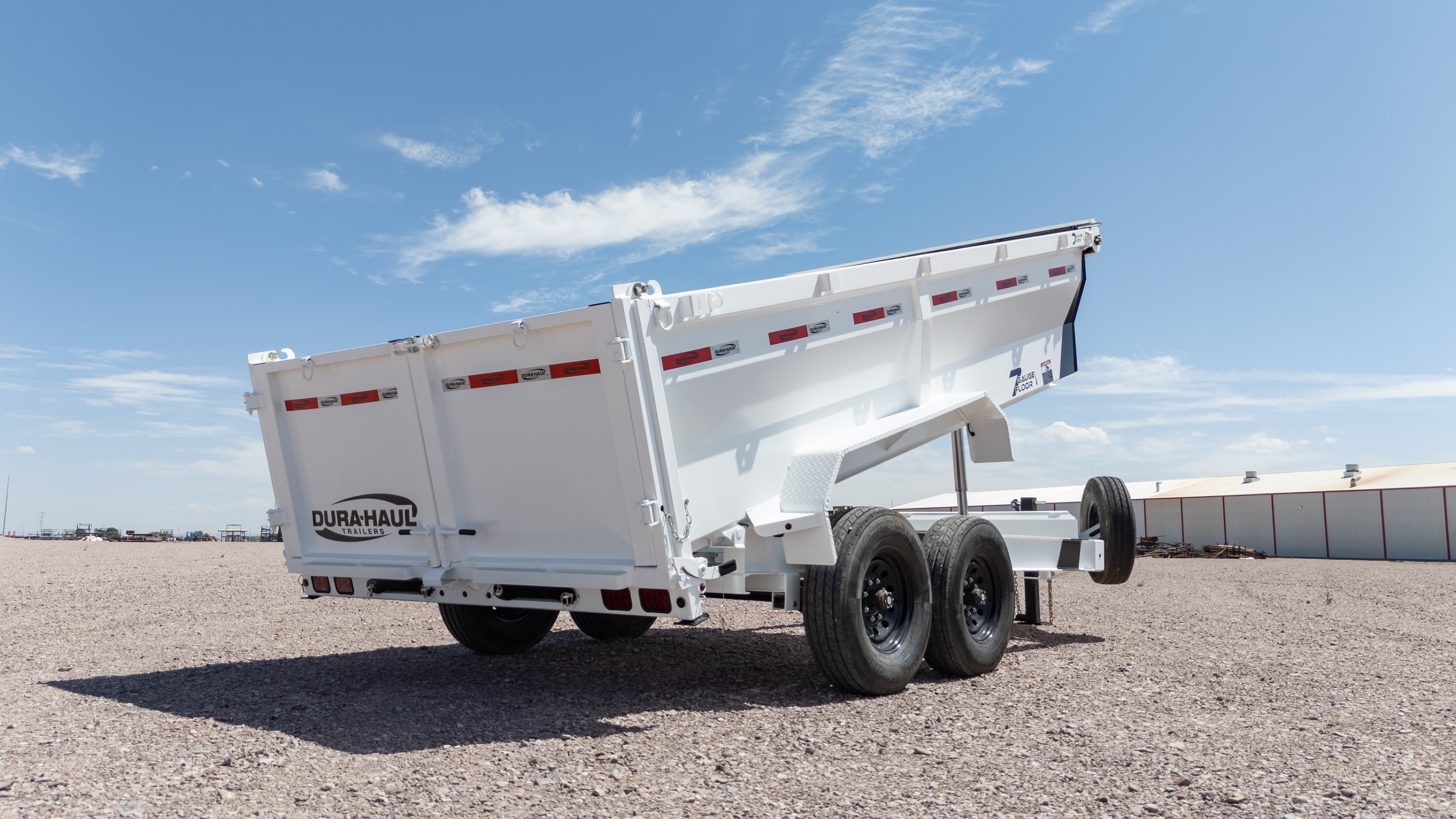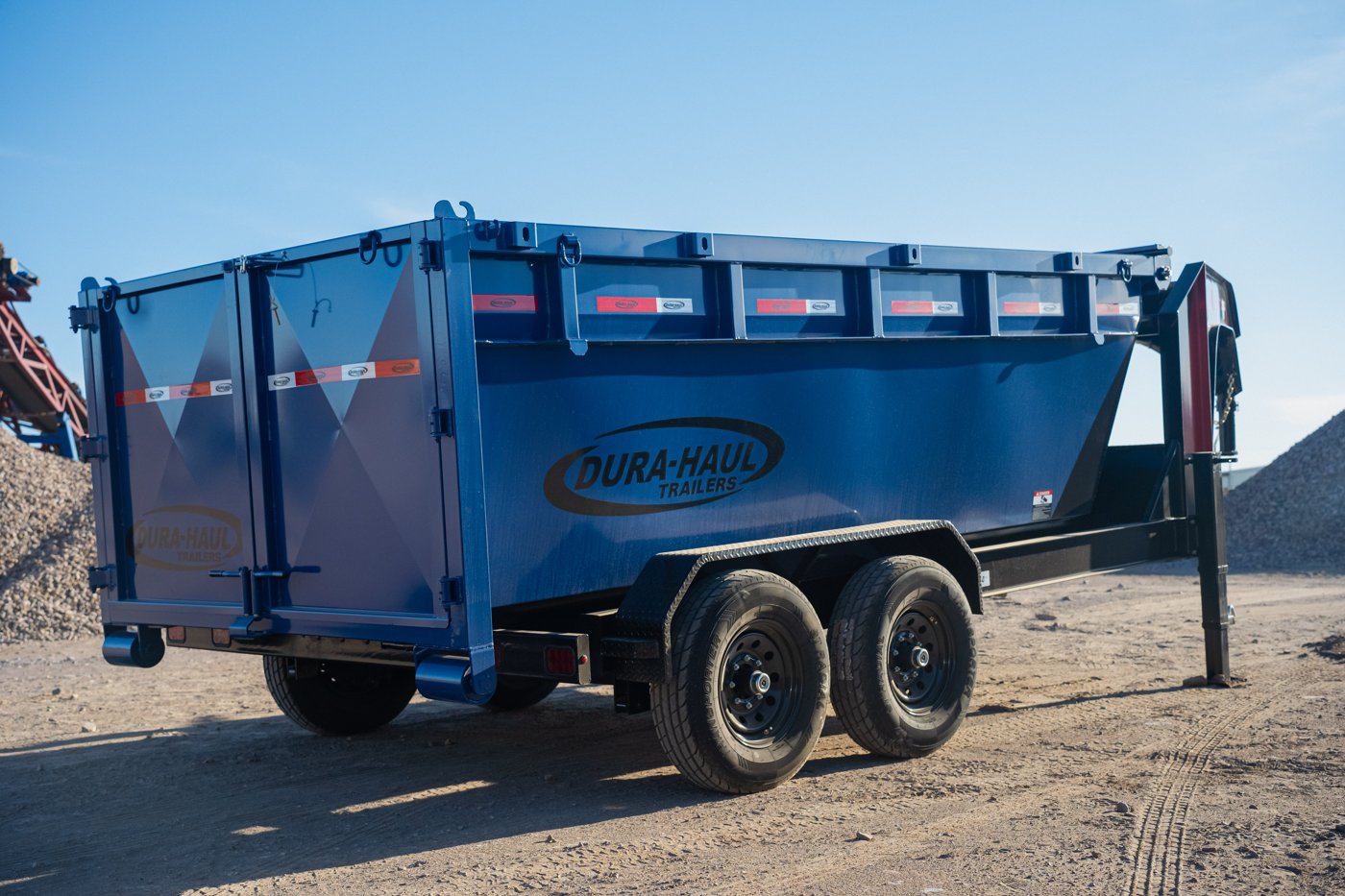
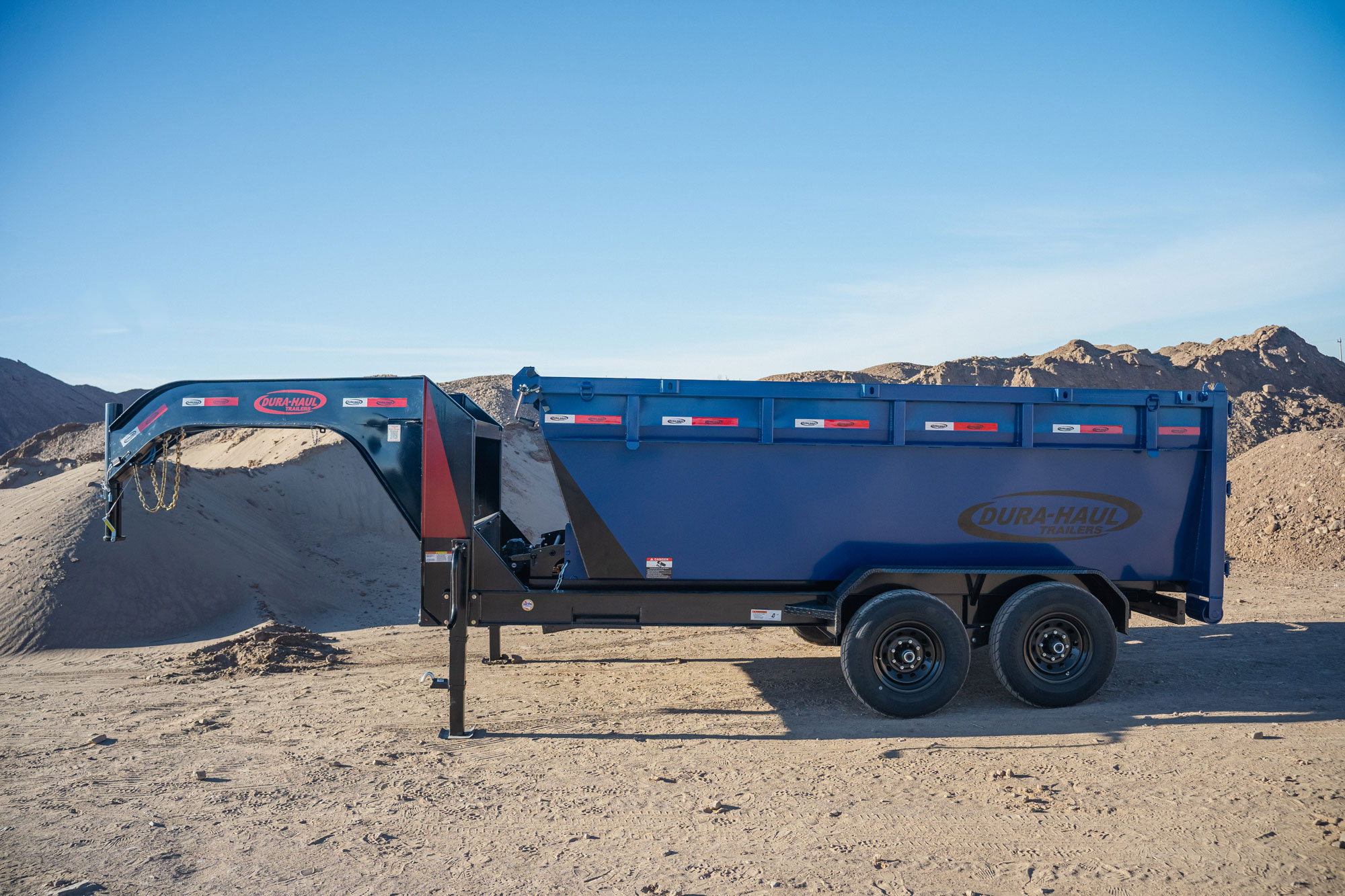
If you have settled on a gooseneck dump trailer, the next question usually comes down to length. The 14 ft and 16 ft beds are two of the most common sizes, and on paper the difference looks small. In practice, those two extra feet change how much material you can carry by volume, how the trailer handles on a job site, and whether you will actually use the extra space. This guide walks through what to compare so you can pick the length that fits your work instead of guessing.
Why Gooseneck for a Dump Trailer?
A gooseneck hitch couples to a ball mounted in the bed of a pickup, over or slightly ahead of the truck's rear axle. That puts the trailer's pin weight on the truck's frame rather than at the rear bumper. For heavy, dense loads like gravel, dirt and demolition debris, many owners find a gooseneck tows more steadily and turns tighter than a comparable bumper-pull. The tradeoff is that you need a pickup with a gooseneck ball installed, and the truck bed is partly taken up by the hitch.
Length Changes Volume More Than Payload This is the most important point, and it surprises a lot of first-time buyers. A longer bed lets you haul more cubic yards, but it does not automatically let you haul more weight. The weight you can carry is set by the trailer's Gross Vehicle Weight Rating (GVWR) minus the trailer's own empty weight. Two trailers with the same axles and the same GVWR can have nearly the same payload even if one bed is two feet longer, and the longer one may even weigh a little more empty.
You can estimate a bed's volume yourself:
· Multiply inside length x inside width x side height, all in feet
· Divide by 27 to get cubic yards For example, a bed about 7 ft wide inside with 2 ft sides holds roughly 7.3 cubic yards at 14 ft and about 8.3 cubic yards at 16 ft when filled level. Your trailer's actual inside dimensions and side height will vary, so measure or check the spec sheet.
Match the Bed to What You Haul Dense materials hit the weight limit long before the bed looks full. Gravel, wet sand, topsoil and broken concrete can weigh well over a ton per cubic yard, so a level-full bed of these materials can exceed a typical dump trailer's payload. Ask your supplier for the weight per yard of the specific material, and do the math before you load.
Light, bulky materials are a different story. Mulch, brush, leaves, shingles mixed with debris and general cleanup loads often fill the bed before they reach the weight limit. This is where a 16 ft bed earns its keep.
A simple rule of thumb:
· Mostly dense material (rock, dirt, sand, concrete): a 14 ft bed is often enough, because weight, not space, is the limit
· Mostly bulky, lighter material (mulch, brush, roofing tear-off, cleanup): a 16 ft bed can save trips
· A mix of both: think about which loads you run most often, not the occasional one
Handling, Parking and Job-Site Access A longer trailer needs more room to turn, back up and park. If you work in tight residential streets, narrow driveways or crowded job sites, the shorter overall length of a 14 ft trailer can make daily work easier. If most of your stops are open lots, farms or commercial sites, the extra length matters less.
Also think about where the trailer lives when you are not using it. Measure your storage spot, including room to swing the gooseneck and hook up.
Check Your Truck and Your Paperwork Before you choose either length, confirm that your truck is rated for the loaded trailer. Your owner's manual lists the truck's towing capacity, Gross Combined Weight Rating (GCWR) and payload, which has to cover the gooseneck pin weight. Exceeding any one of these is unsafe even if the others look fine.
Heavier combinations can also bring licensing and registration requirements. Depending on the total combined weight and how the trailer is used, some states and federal rules may require a commercial driver's license or other paperwork, especially for business use. Rules vary, so check with your state's motor vehicle agency or a qualified advisor before you buy.
A Quick Buying Checklist Before you decide on 14 ft or 16 ft, run through these questions:
· What do I haul most often, and roughly how much does it weigh per yard?
· What is the trailer's GVWR, empty weight and resulting payload?
· What are the inside length, width and side height?
· Is my truck rated for the loaded trailer and the pin weight?
· Do my usual job sites and my storage spot have room for the longer trailer?
· What gate style do I need: barn doors, spreader gate or a combination?
Common Mistakes to Avoid
· Choosing the longer bed expecting more payload, when the GVWR is the same
· Filling a bed level with gravel or wet dirt without checking the weight
· Buying more length than your job sites can comfortably fit
The Bottom Line There is no single right answer between a 14 ft and 16 ft gooseneck dump trailer. If your loads are mostly heavy and your sites are tight, the 14 ft is often the practical choice. If you move a lot of bulky, lighter material and have room to maneuver, the 16 ft can cut down on trips. Start with what you haul, check the numbers on the VIN label and your truck's manual, and the right length usually becomes clear.
If you have questions about sizing a gooseneck dump trailer for your work, give our team at Trailer Professionals a call at 903-840-4143.