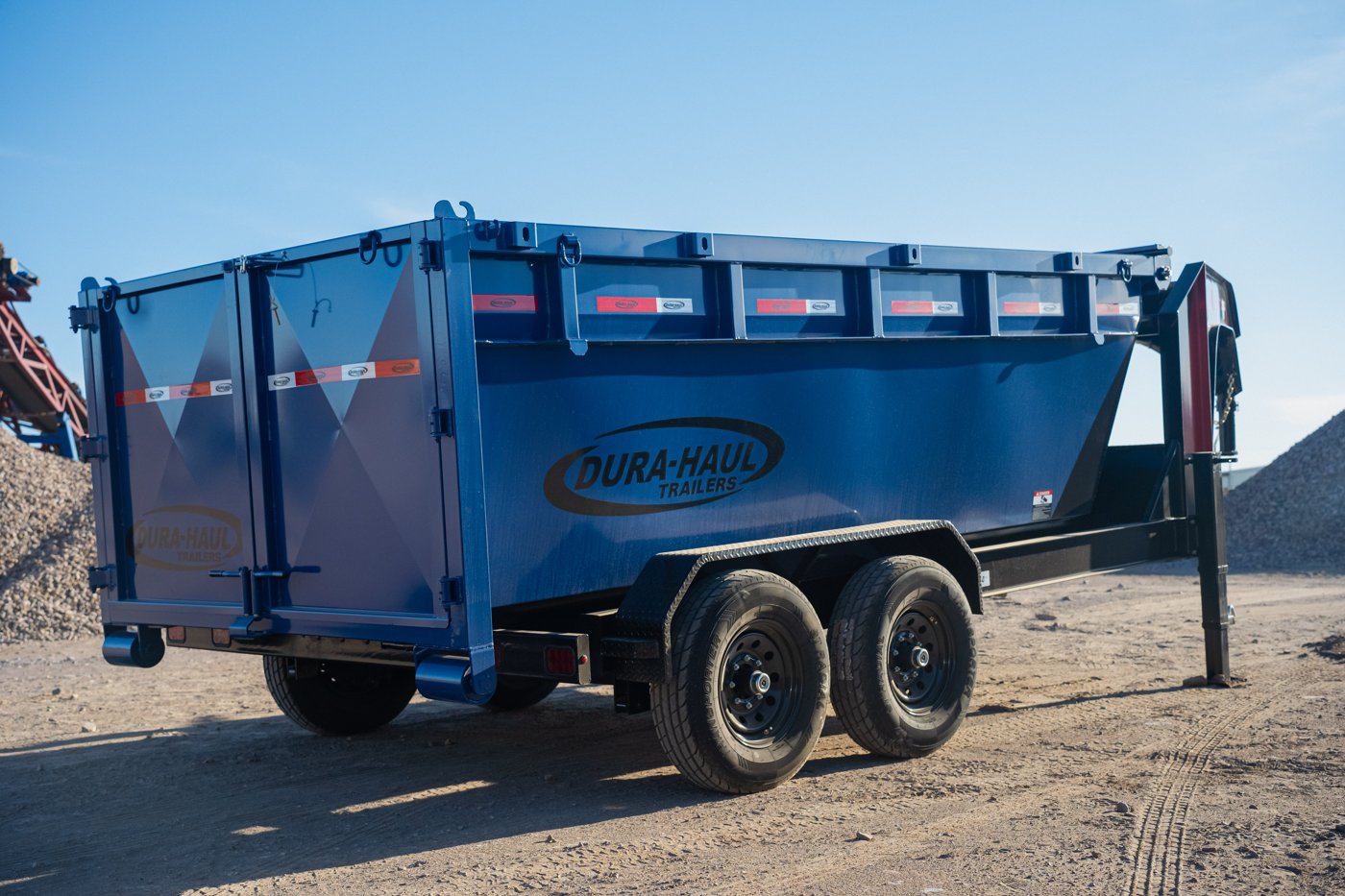
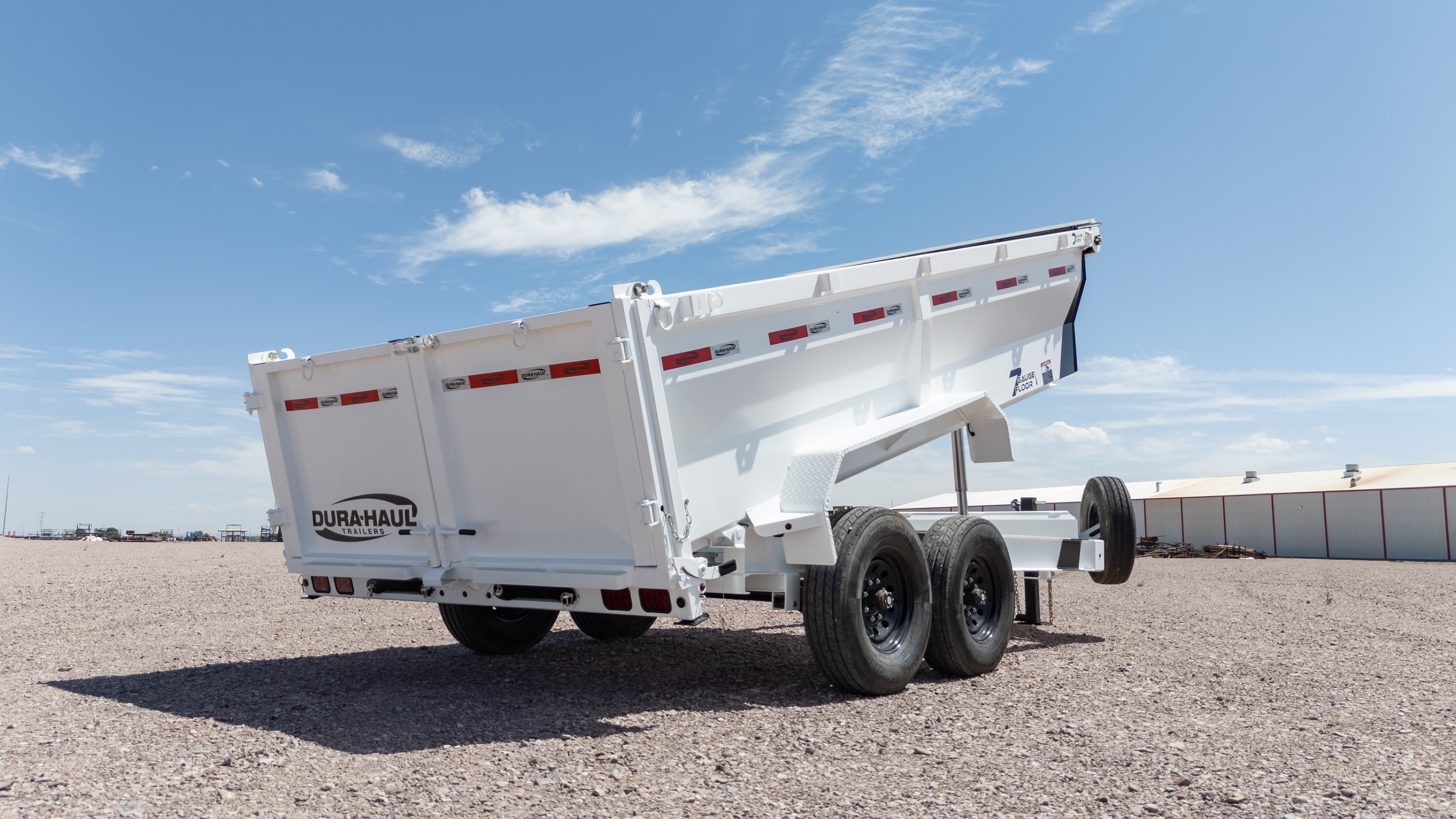
A dump trailer is one of the most useful tools you can own for moving gravel, dirt, mulch, demolition debris, and storm cleanup. It also asks more of the operator than a flat utility trailer does. You are lifting thousands of pounds several feet into the air, and the way you load, park, and raise the bed has a big effect on how safely the job goes. This guide walks through the basics every dump trailer owner should know.
How a Dump Trailer Works
Most dump trailers use an electric-over-hydraulic system. A battery on the trailer powers a hydraulic pump, and the pump drives one or more cylinders that raise the front of the bed so the load slides out the back. Common lift setups include a single telescopic cylinder at the front of the bed and scissor-style hoists mounted underneath. The battery is usually kept charged through the tow vehicle's wiring while you drive, and many owners also use a separate charger.
The rear gate typically opens one of a few ways: a barn-door style that swings open, a spreader gate that lets material out at a controlled rate, or a combination gate that does both. Knowing which gate you have matters, because it changes how material leaves the bed.
Loading: Weight and Placement
Before you load, know your numbers. The trailer's VIN label lists its Gross Vehicle Weight Rating (GVWR), which is the most the loaded trailer may weigh, including the trailer itself. Subtract the trailer's empty weight to get the cargo you can actually carry.
Dense materials add up faster than most people expect. A dump bed filled level with wet sand, gravel, or topsoil can exceed the trailer's capacity well before it looks full. Ask your supplier for the approximate weight per cubic yard of what you are buying, and do the math before they load you. When in doubt, take a partial load and use a certified scale.
Placement matters too:
- Spread the load evenly from side to side
- Keep weight slightly forward of the axles so the tongue or gooseneck carries its share
- Avoid piling material at the very back, which can lighten the tongue and lead to sway
- Use a tarp for loose material, since many states require loads to be covered or secured
Choosing Where to Dump
Most dump trailer tip-overs and close calls start with where the trailer is parked. Before raising the bed:
- Pick level, firm ground. Soft soil, a fresh fill pile, or a side slope can let one side sink as the bed rises, and a raised, loaded bed is top-heavy.
- Look up. Check for power lines, tree limbs, roof overhangs, and garage door frames. A fully raised bed can reach well above the trailer's normal height.
- Keep the truck and trailer in a straight line. Raising the bed while jackknifed puts uneven stress on the hitch and frame.
- Clear the area. Keep people, pets, and vehicles out of the dump zone and away from the back of the trailer.
Raising and Unloading
With the trailer parked, set the truck's parking brake. Open or set the rear gate for the material you are hauling before you lift, since a closed gate can trap the load and stress the bed.
Raise the bed slowly and watch the load. Sticky material like wet clay may hold in the front of the bed and then let go suddenly. If the load does not slide, lower the bed and loosen it rather than raising further and hoping. If the trailer starts to lean, stop and lower the bed right away.
Once the load is out, you can pull forward slowly a short distance to help spread or clear the last of it if needed, but do not drive any distance with the bed raised. Lower it completely before moving on.
Never Work Under a Raised Bed Without Support
Hydraulic systems can lose pressure because of a leak, a failed hose, or someone touching the controls. If you need to inspect, clean, or service anything under the bed, use the bed's safety prop or support bars, or proper rated stands, and follow the manufacturer's instructions. Never rely on hydraulic pressure alone to hold the bed up while anyone is underneath.
Keeping the Hydraulic System Healthy
A little routine care keeps your dump trailer working when you need it:
- Check the hydraulic fluid level with the bed fully lowered, and use the fluid type listed in the owner's manual
- Inspect hoses and fittings for cracks, rubbing, and leaks
- Keep the battery charged and the terminals clean, especially in cold weather
- Grease the hinge points and lift pivots on the schedule the manufacturer recommends
- Test the remote or control pad, and replace it if buttons stick
- Wash out corrosive loads like fertilizer or salt so they do not sit in the bed
Pre-Dump Checklist
- Load weight is within the trailer's GVWR
- Load is spread evenly and covered for travel
- Trailer is on level, firm ground in a straight line with the truck
- No overhead lines, limbs, or structures in the way
- People and pets are clear of the dump zone
- Rear gate is open or set correctly
- Bed is fully lowered before driving away
Check the Rules Where You Haul
Requirements for trailer brakes, breakaway systems, load covering, and registration vary by state, and some rules change if you are hauling for a business. Check with your state's department of motor vehicles or transportation agency, and follow the trailer manufacturer's owner's manual for your specific model.